Blog
Flexitarian Diet – Sensible Solution?
 “There are so many diet fads out there already! What’s a flexitarian – another one?!”
Paleo, keto, Mediterranean, vegetarian, vegan, plant-based, low-carb, Atkin’s, South beach, low-fat, carb-counting, calorie-counting, counting points. The list can go on, but you get the point – all of these diets either remove a whole food group (or groups), or limit food intake creating a sense of deprivation and often despair. Eating healthy doesn’t have to be this complicated and restrictive, what it does have to be – is with health and pleasure in mind, satisfying the physical needs for energy and adequate nutrient intake without overeating, and the need to enjoy the food we eat.
That’s why a flexitarian approach may be the most sensible of them all.
I wouldn’t even call it a diet, it is not a regimented restrictive military-style way of eating with a list of off-limits foods; it is quite the opposite – a sustainable way to promote health and longevity along with minding environmental concerns and allowing for certain foods in moderation to lessen possible negative outcomes of eating too much of those (red meat, processed foods, added sugar).
With the awareness of negative health and environmental outcomes of eating too much of animal products, many people are looking into ways to reduce their intake of these foods. And reducing them would mean replacing them with more plant-based options: legumes (beans, lentils and peas), whole grains, vegetable and fruits, nuts and seeds.
A flexitarian approach doesn’t give any specifics as to how much of different food groups’ products we should eat. It is meant to be up to each person individually keeping nutritional common sense in mind.
The variations could be any of the following:
- Eating mostly plant-based on weekdays, and having small amounts of meat, poultry, fish and other animal products on weekends;
- Consuming meat 1-2 times a week;
- Eating animal products daily but only at 1 meal (lunch or dinner);
- Choosing not to eat red meat at all;
- Only eating animal products at certain holidays and celebrations.
The flexitarian diet is often described as semi-vegetarian characterized by eating plenty of fruits, vegetables, legumes, whole grains, and occasional and/or moderate amounts of animal products.
The benefits of this approach are plentiful, here’re just a few of many:
- More fiber in the diet (healthy gut, reduced cholesterol, healthy weight, etc.)
 More vitamins, micronutrients, phytochemicals and antioxidants only found in plant foods (improved immune function and general health)
- Reduced carbon footprint (environmental health and sustainability)
Not only we fill up on a bounty of plant-based foods with all their healthful benefits, but can also eat an occasional steak or a seafood stew without guilt or health concerns. And that’s a powerful psychological factor that is absent in most diets, leading most people ever trying them to fail, and worst yet – blame themselves for doing so. Human nature is not able to adapt to deprivation and food restriction. Our body can’t tell the difference between a diet and a life-threatening famine.
If you’ve been considering the idea of reducing animal foods consumption, but wasn’t sure a more strict approach (vegan or vegetarian) is for you, trying flexitarian could be an option that is sustainable in the long run. Making lifestyle changes could be hard, especially drastic changes. They may also be hard to keep. Making smaller incremental changes, as with the flexitarian approach, warranties a more successful outcome of sticking with the changes.
Stay nourished my friends!
Check oUT OTHER RECENT POSTS

Lose Weight, Feel Better – 3 Week Diet Reboot Plan

Healthy Swaps for Your Everyday Recipes



Hello, I’m Tatiana. I am a Licensed Dietitian Nutritionist and a Certified Nutrition Specialist.
I help people
- normalize their relationships with food,
- peel off the layers of misunderstood physical, nutritional and emotional needs,
- lose weight as a side effect of finding peace with food,
- stop obsessing about food and
- start living the freedom!
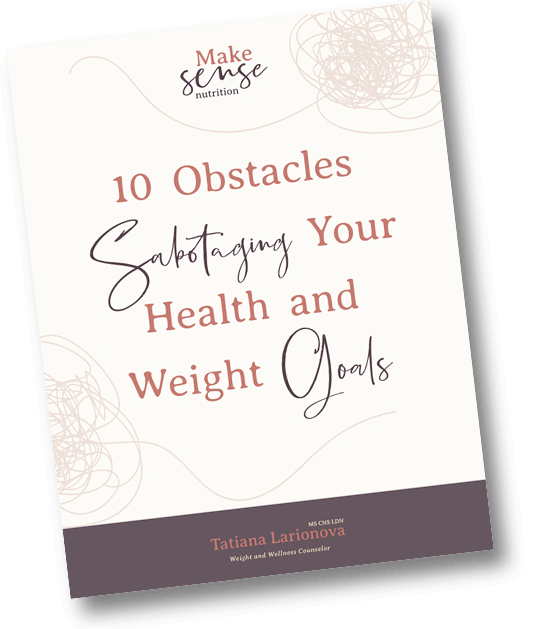
FREE DOWNLOAD
What stops you from getting in your best shape?
- Do you spend hours searching for the latest, most effective diet?
- Are you exhausted from using up so much energy and mental space on dieting and weight solutions?
- Are you uneasy around food and can’t seem to trust yourself to eat just enough for your body?
- Do you deal with challenges getting in the way of your healthy eating goals?
I’ve compiled this free tool - a list of 10 Obstacles Sabotaging your Health and Weight Goals that will help you pinpoint challenges you are dealing with that stop you from moving forward.